 Algebra 1
Factoring
GCF, factoring trinomials, special patterns
This unit is about factoring: taking an expression like x²+5x+6 and rewriting it as a product, (x+2)(x+3). It's worth learning because it's the move that makes solving quadratics possible in the next unit, and it has a built-in way to check your own work.
It helps to have multiplying polynomials from Unit 10 fresh in your mind, since factoring is that same work run backward.
Before you start a session, redo two or three problems from a lesson or two back from memory. It's a small warm-up, and it's one of the most useful things you can do to keep a skill from fading.
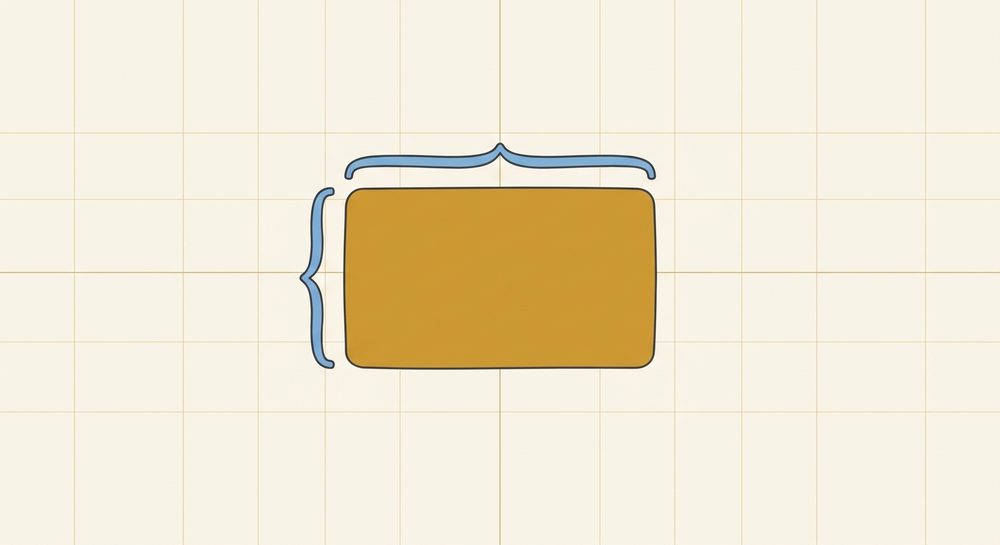
One idea runs through the whole unit: factoring is multiplying, run backward. In Unit 10 you took two factors and built a product; you filled in the area box. Here you're handed the finished product and asked to rebuild the factors: the same box, but now you're working out the edges.
That backward move has a useful side effect. Because factoring undoes multiplying, you can always check your answer by multiplying it back out, and you must land on exactly what you started with. You'll use that check on every single example. If a factorization doesn't multiply back to the original, it's simply wrong, so you redo it, with no guessing whether it's right.
One ground rule makes "does this factor?" a question with a definite answer: in this unit, we factor over the integers. Every factor you write has whole-number coefficients. So the only honest endings are a clean integer factorization or the verdict prime. We don't reach for fractions, decimals, square roots, or anything fancier as factoring tools here. Those belong to Unit 12.