 Algebra 1
Data & Statistics
One/two-variable statistics, line of best fit, correlation vs. causation, two-way tables
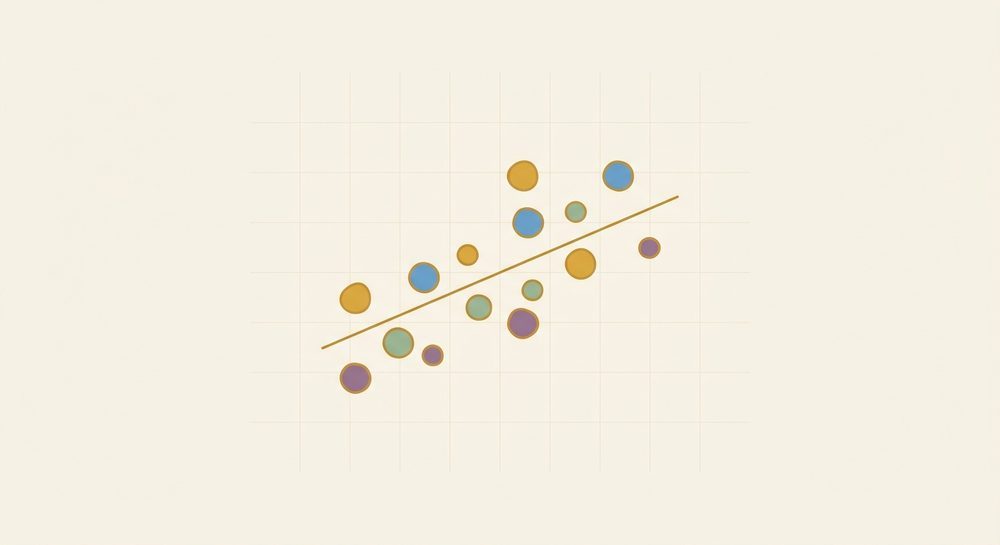
This is the unit where statistics starts answering everyday questions about real piles of numbers: test scores, prices, survey answers. It is three short, mostly separate lessons, and they lean more on plain judgment than on heavy arithmetic.
The biggest idea in the whole unit is one sentence in Lesson A.2: two things moving together doesn't prove one causes the other. If you take only that away, the unit has paid for itself.
It helps to have everyday arithmetic and a bit of comfort with fractions and percents fresh before you start. The middle lesson also picks up the line-drawing from earlier in the course, but you don't need to dust that off until you get there.
A reminder that holds for the whole book: you don't have to finish a lesson in one sitting, and when you come back, redoing two or three problems from an earlier lesson from memory is a good way to warm up.